
No, it's not a weird tent!
So...What is a Malaise trap?
It’s not actually a tent, but it does look a bit like one! A Malaise trap is a tent-like structure that gently collects flying insects as they move through the environment. Invented in 1934 by the Swedish entomologist René Malaise, it’s a very effective tool for scientific research, especially when scientists want to study biodiversity. The trap is black and white and has a mesh wall running down the middle that helps guide insects into the collecting container.
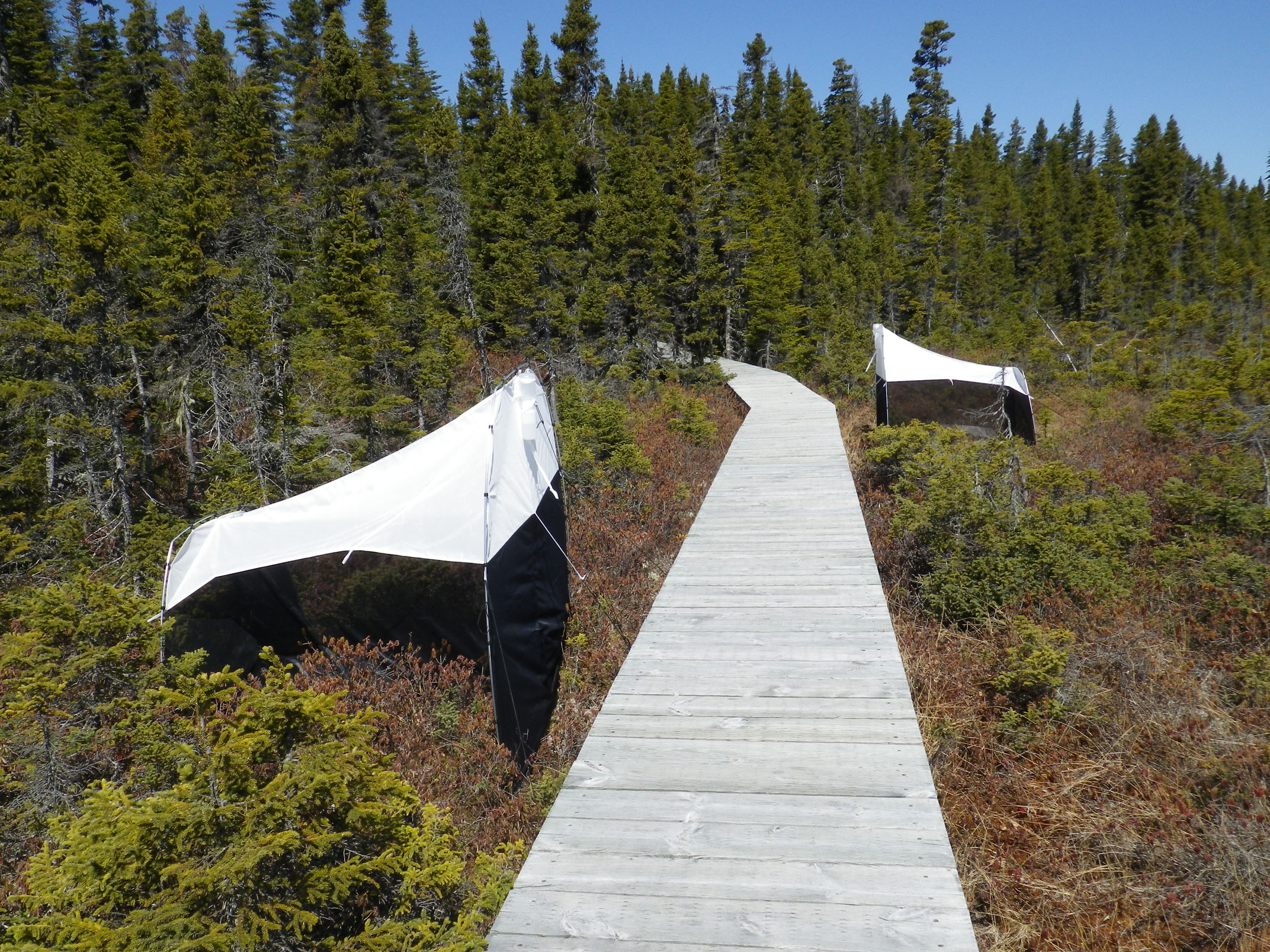
How big is it?
A Malaise trap is about the size of a small camping tent. It stands roughly 1.8 metres tall (about the height of a doorway) and covers about 1.8 × 1.6 metres of ground — roughly the space of a picnic table. In the field it looks like a mesh tent stretched between poles, large enough to notice but compact enough to fit comfortably along a trail, in a garden, or on the edge of a field.
How Does it Work?
When insects encounter the trap they will naturally fly upward toward the brighter white roof to avoid the black mesh panel. The insects are directed to the top of the trap, where they enter a collection bottle and become trapped. The collection bottle is filled with a preservative to keep the insects – and their DNA – intact for scientists to study. A Malaise trap is usually placed in a natural flyway where it can easily collect hundreds of insects in just one week.
What's so special
About this Bug Trap?
Easy to set up, easy to maintain
A Malaise trap can stay in place for a long time. The only part that needs regular changing is the collection bottle, usually once a week. This makes the trap a low-cost, low-maintenance way to sample insects
One size fits (nearly) all
Malaise traps work really well for many kinds of flying insects — especially flies, wasps, and true bugs — and can provide a very detailed picture of local biodiversity.
Researchers love it!
Since Malaise traps can be set up in a very standardized way, they’re perfect for long-term bio‐monitoring programs. Scientists use them to track trends over time and see how human activities affect species diversity.