
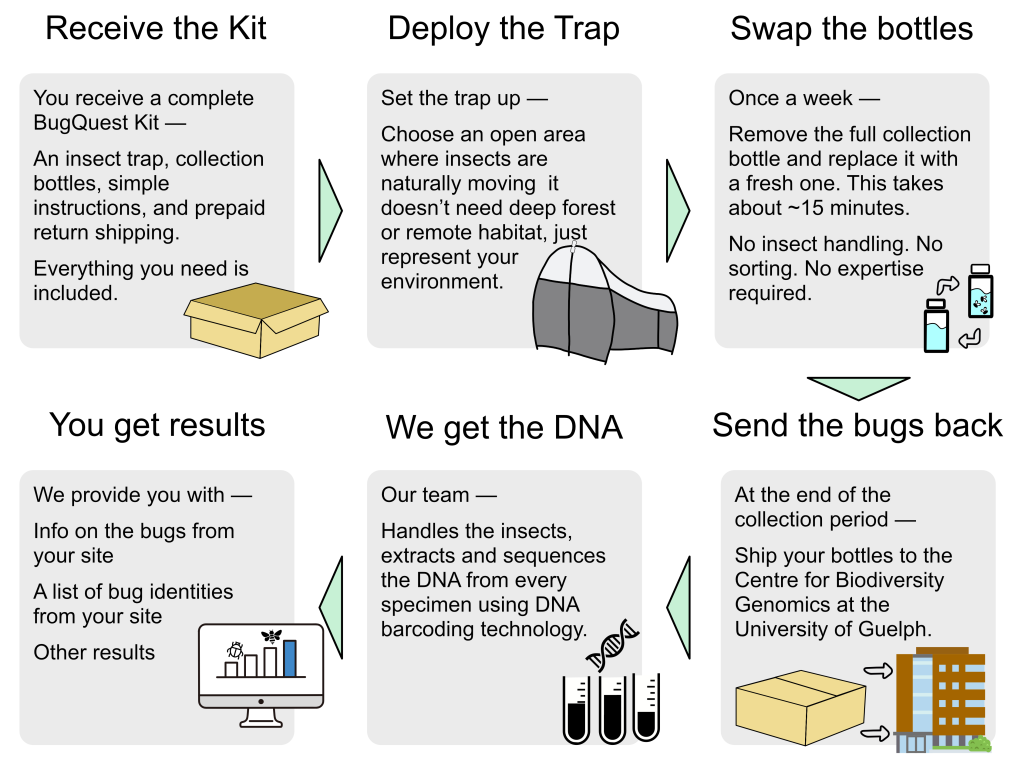

What is in a
Quest Kit?
- 1 Malaise trap – a tent-like structure that collects bugs
- Plastic bottles with some table salt – one for each week of collection (just add water to preserve DNA!)
- “Science in Progress” sign for your trap
- Labels for your bug bottles
- Instruction Manual
- Collection Log Sheet
- Materials for return shipping (including prepaid waybill)
*Additional educational materials may be included.
Let's get started by
Setting the Trap!
Once your insect trap has arrived, it’s time to figure out where to put it! Does your school have a garden or any wooded areas? Do you think it might be safer to put it in your teacher’s backyard? What different kinds of insects would you get in a field compared to under some trees? Remember, your trap should be exciting to tend to, not exhausting. Pick a spot that is easy to return to – then, set up your trap!
once a week it's time to
Maintain & Document
Why Trap Maintenance and Documentation Matters
A Malaise trap collects the insects, but the collection only becomes valuable when accurate information is attached to it. Every bottle needs to be linked to a specific trap, site, and collection period. A missing label, unclear date, or unrecorded trap can affect how the results are understood, making them harder to interpret and compare across sites and collection weeks. Taking a few minutes to maintain the trap and document the collection helps protect the quality of the data from your site.
Swap the Quest Bottle!
The bottle on the trap needs to be swapped out once a week with a fresh Quest bottle. Change the bottle on the same day each week, or as close to the same day as possible. Keeping a regular schedule helps each bottle represent a consistent collection period, making the results easier to interpret and compare across weeks. Make sure to note any inconsistencies on your log sheet.
Label the Quest Bottle!
Before adding the new bottle to the trap, check that the labels match the correct trap, write the collection start date, and make sure the information has been filled in using pencil. When you remove the bottle from the trap write the collection end date and place the completed paper label inside the bottle before storing it.
Record the Collection!
On your Collection Log Sheet record the week number, BQ#, collection dates, and anything unusual that may have affected the sample, such as heavy rain, strong wind, trap damage, or disturbance. Be sure to include these notes when submitting your data to the Data Submission Form. These details are important for future data analysis.
Keep the Trap Operational!
Between weekly bottle changes, a quick check can help keep the trap collecting properly. Make sure the trap is still standing, poles are in place and intact, the fabric is not twisted, the bottle is attached securely, and nothing is blocking insects from getting through the trap head and into the bottle (like a spider web). These checks will take less than a minute, but catching small issues early helps avoid losing a week of insect activity.
after that, what happens. . .
Back at the Lab?
After weeks of collecting, you will ship the Quest Bottles back to the Centre for Biodiversity Genomics (shipping costs covered by us).
Here, our expert Bug Handling Team prepares the insects for the lab. Then our DNA Team extracts DNA from your Quest bottles and uses DNA barcoding to identify the species present in each bottle.
What comes next?
Analyzing the Data
After the lab has generated the DNA barcodes, the next step is to interpret all of the information. It’ll take a little time for our experts to work their magic, but soon enough we’ll be ready to share what you’ve discovered on your BugQuest.
what information
Will be in my report?
Your BugQuest report will show what was found in your trap after DNA barcoding. It will include the main insect groups found, a list of species, and photos where available.
The sample reports below are from an earlier version of the project. Future reports will include more detail, helping you compare results through the season and explore what was living around your site.